Masters in Artificial Intelligence @ Memorial University (2024–present)
Studying foundational and advanced topics in AI including supervised/unsupervised learning, model interpretability, and generative models.
Completed courses in AI Foundation, Software Fundamentals, Applied Algorithms, Topics in AI, and Special Topics in Algorithmic Techniques of AI & ML.
Engaged in hands-on labs involving implementation of search algorithms, neural networks, and reinforcement learning techniques.
Developed capstone-level research projects with a focus on ethical AI and practical deployment of intelligent systems.
Worked on real-world applications such as medical image analysis and intelligent automation solutions.
CGPA: 3.5/4.0
B.Tech in Electronics & Communication @ GGSIPU, Delhi (2019–2023)
Completed coursework in Digital Electronics, Control Systems, VLSI Design, Wireless Communication, Satellite Communication, and Signal Processing.
Acquired strong programming skills through courses in C++, Data Structures, and Microprocessors & Microcontrollers.
Gained solid theoretical foundation through Applied Mathematics I–IV, Network Analysis, and Analog/Digital Communication Systems.
Engaged in laboratory-based learning across all semesters including DSP Lab, Antenna Lab, and Microcontroller Lab.
Capstone project focused on CNN-based plant disease detection, using deep learning for image-based classification.
Minor project involved building a mobile-controlled floating waste collection robot using Arduino and IoT.
Graduated with high distinction — CGPA: 9.5/10 (equivalent to 95%).
🚀 Projects
Early Sepsis Detection:
Developed a machine learning pipeline to predict sepsis onset in ICU patients using clinical and demographic attributes such as blood pressure, age, BMI, and lab results.
Performed advanced preprocessing including imputation, normalization, and quantile transformation to ensure model robustness.
Addressed class imbalance using SMOTE and reduced dimensionality with PCA, capturing 80% variance.
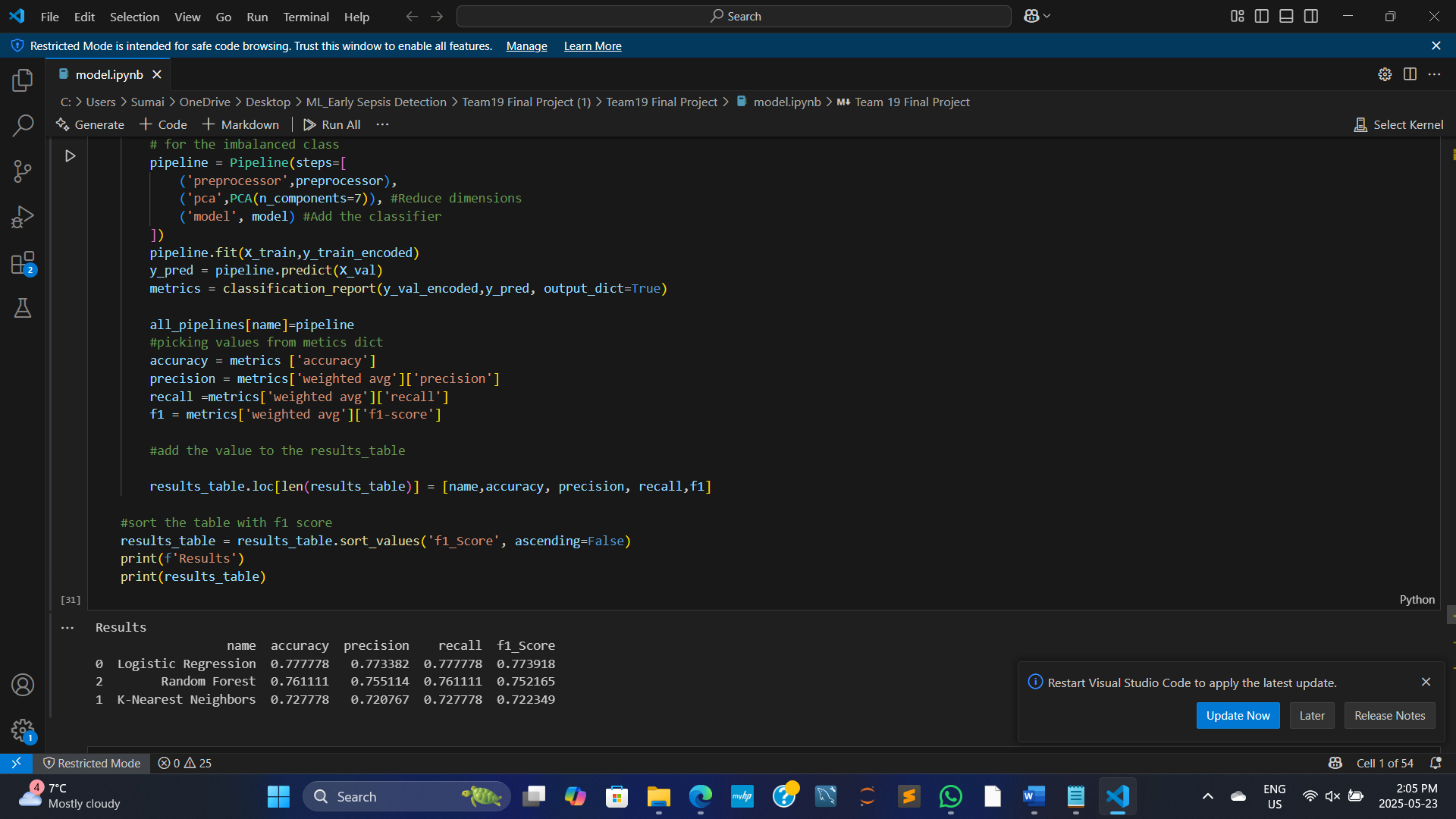
Built and fine-tuned classification models including Logistic Regression, Random Forest, and KNN, achieving high recall and AUC scores.
Validated age as a significant feature through hypothesis testing (t-test) and statistical analysis.
Visualized model performance and correlations using heatmaps and feature importance plots for clinical interpretability.
Contributed to early detection efforts that support improved ICU care and informed decision-making for high-risk patients.
Screenshot of performance metrics and model evaluation from the project:
Plant Disease Diagnosis:
Farmers often face economic loss and crop waste due to various diseases in potato plants. This solution addresses that challenge using deep learning.
Implemented a CNN-based image classification model using TensorFlow to detect diseases from uploaded plant images.
Enabled a user-friendly interface for farmers to take a photo and upload it to the website, which returns instant diagnostic results.
Used TensorFlow Datasets and data augmentation to improve training data variety and model generalization.
Frontend developed with HTML and CSS, styled for accessibility and ease-of-use for low-tech users.
Deployment handled using Flask, allowing seamless integration of model predictions with the user interface.
Project demonstrated potential for improving early detection, minimizing yield loss, and aiding low-resource farming communities.
Project demo video showcasing the model in action:
Floating Waste Collection Robot:
Designed a Bluetooth-controlled, eco-friendly robot to collect plastic waste and debris from lakes, ponds, and rivers.
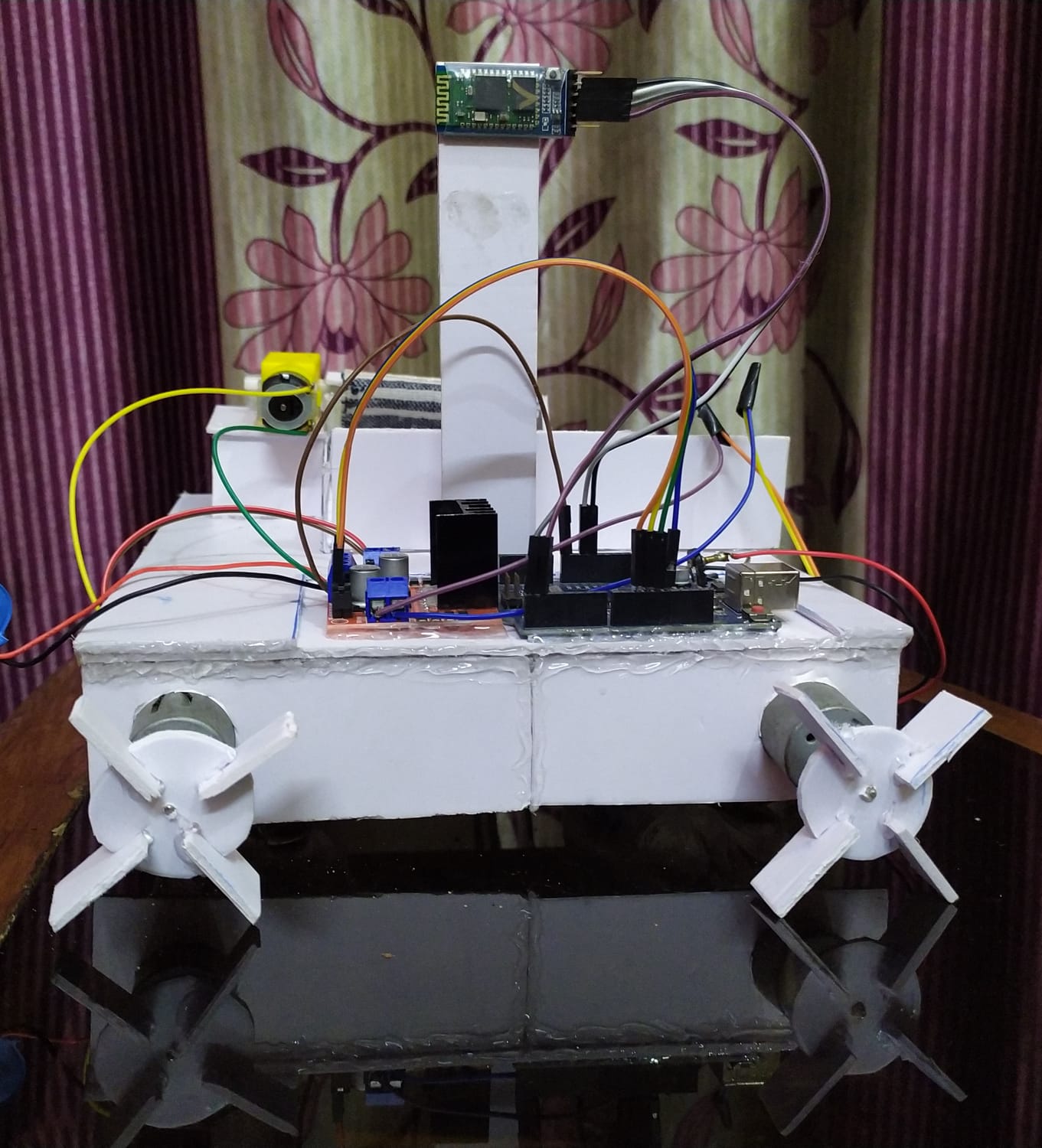
Integrated DC motors with custom-designed propellers for omnidirectional mobility across the water surface.
Utilized Arduino UNO and HC-05 Bluetooth module to enable remote control via a smartphone application.
Installed a conveyor belt mechanism to lift floating trash into a collection bin; included a load sensor to monitor capacity.
Used sunboard and airtight plastic bottles for buoyancy, ensuring lightweight, water-resistant construction.
Powered by a 12V battery capable of continuous 30-minute operation; tested on multiple water surfaces with successful results.
Built using cost-effective materials to ensure scalability and affordability for public or municipal use.
Contributed toward real-world environmental conservation efforts by automating water surface trash removal.
Project image showcasing the robot design and electronic components:
Project demo video illustrating the robot in action:
💼 Professional Experience
Machine Learning Intern @ TGC (2023–2024)
Led development of a voice-based emotion recognition system to support mental health assessments.
Collaborated on building an AI-powered chatbot for student counseling using natural language processing (NLP).
Managed version control using Git and collaborated with a cross-functional team on GitHub.
Presented weekly demos to mentors, incorporating feedback into sprint iterations following Agile methodology.
Documented and optimized model pipelines to improve performance and maintainability.
Research Intern @ DRDO (2022)
Worked on PCB schematic design and layout for GPS-enabled tracking devices used in defense logistics.
Utilized DipTrace for multilayer PCB design and assisted in field testing and validation.
Collaborated with senior engineers to evaluate performance and suggest improvements to hardware designs.
Prepared detailed technical documentation for lab reports and design proposals.
Gained hands-on experience in real-time telemetry and embedded systems integration.
IoT Developer Trainee @ APTRON (2021)
Developed and deployed IoT-based prototypes including home automation systems and smart surveillance modules.
Programmed NodeMCU microcontrollers using Arduino IDE and integrated cloud data logging via Firebase.
Conducted training sessions and technical demonstrations for peer learning groups.
Implemented sensor calibration and real-time monitoring dashboards for end-users.
Contributed to project design and troubleshooting across both hardware and software stacks.
🧩 Other Experience
Guest Experience Supervisor & Culinary Support @ Peter's Pizza, St. John's, NL (Nov 2024 – Present)
Deliver exceptional customer service, managing in-person and phone orders, addressing inquiries, and ensuring overall satisfaction.
Supervise and mentor new hires, helping them adapt to the work environment and maintain service quality.
Monitor and ensure compliance with food preparation and safety standards.
Coordinate with team members to maintain cleanliness and efficiency in both kitchen and front-of-house operations.
Develop strong multitasking and communication skills in a high-paced food service environment.